The backdoor Roth, explained
The problem it solves: direct Roth contributions phase out above an income threshold. Conversions have no such limit.
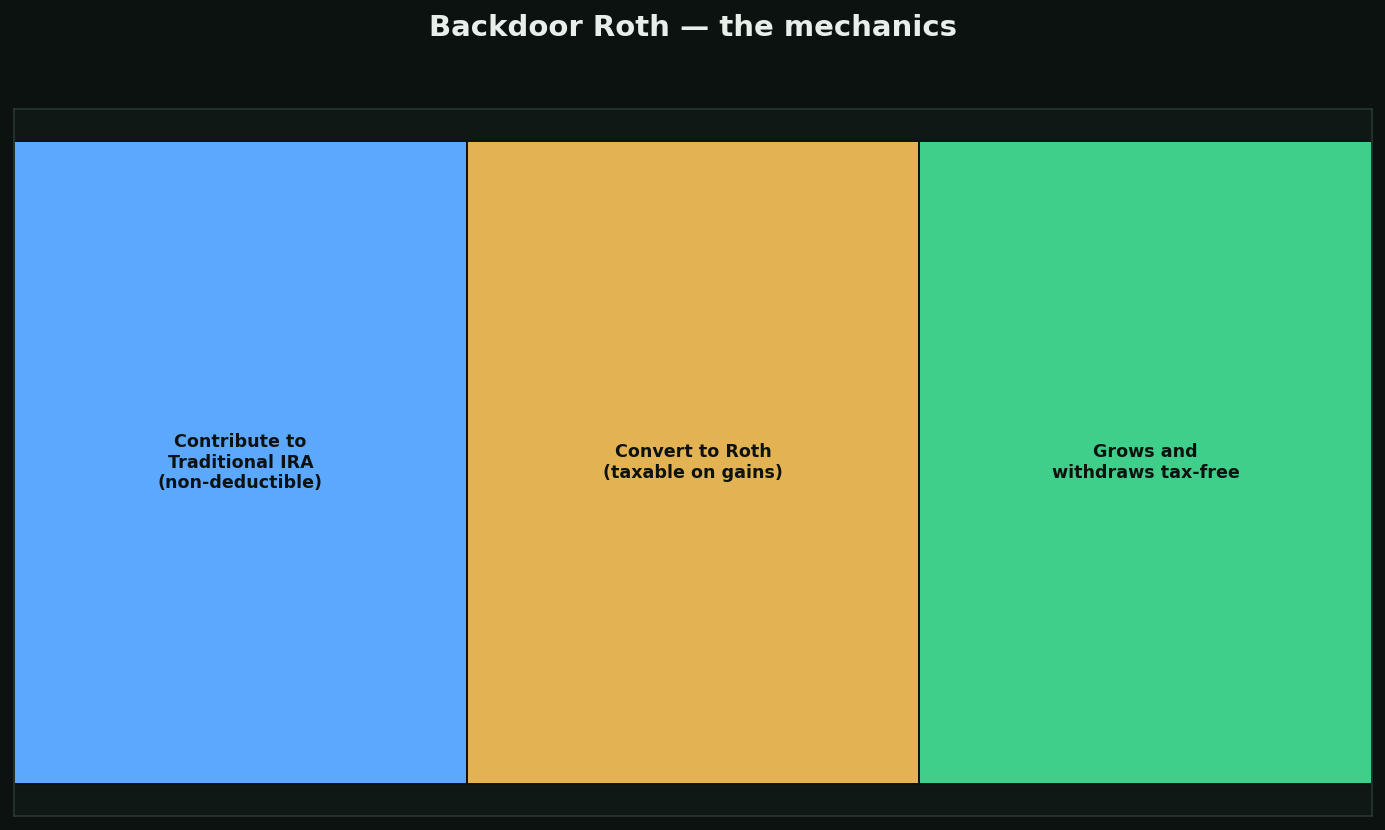
The mechanics: contribute to a Traditional IRA without taking the deduction, then convert that balance to a Roth. You pay tax on any growth between the two steps — usually near zero if done promptly.
The trap that catches people — the pro-rata rule: the IRS treats ALL your Traditional IRA balances as one pot. If you hold other pre-tax IRA money, your conversion is taxed proportionally, not just on the new contribution. People discover this at tax time, after the fact.
This is genuinely one to run past a CPA. The mechanics are simple; the pro-rata interaction with rollover IRAs and SEP/SIMPLE accounts is not, and getting it wrong is expensive.